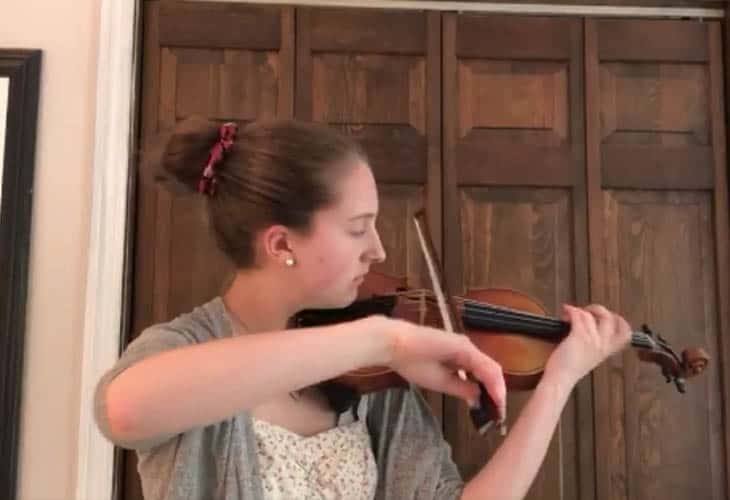
Jeffrey Beausoleil is a classical and global percussionist from Connecticut. Currently a classical percussion performance student at Western Connecticut State University studying under Doug Perry, also taking time off campus to study global percussion with John Marshall. He plans on graduating from WCSU in December of 2026 and intends to continue his studies with various graduate programs that include a masters in percussion performance and PhD in Ethnomusicology.
In the world of global percussion, Jeffrey has spent time with various teachers learning different traditions of percussion from many cultures which include west African percussion with Joe Galeota, middle eastern and Arabic percussion with John Marshall, Afro-Cuban and Haitian drumming with John Amira and Marcus Krieger, Brazilian samba with Ben Toth, Brazilian maracatu with Dr. Alex Casamiro, and steel pan with Dr. Greg Haynes and Ben Toth. He plans to always continue his studies in global percussion.
Jeffrey has been performing with local theater companies including Wilton Theater Company, Richter Theater, Harwich Junior Theater (Cape Cod), Brookfield Theater, Coventry High School Center Stage, and New Fairfield High School. He enjoys playing various musicals as a percussionist and guitarist. He has also been performing with Wilton Community Steel Band which is run by Arthur Lipner.
While he is not in school or teaching percussion lessons, Jeffrey will spend time with his partner and cat in their New Milford home. He enjoys playing disc golf all year round when he gets the chance to. He also enjoys going to quaint towns with his partner for shopping.
Transcript Below
Ray (00:00:00.23)
Jeffrey, I am sure to butcher your last name because it’s not Smith.
Jeffrey (00:00:06.04)
Yes. Go. You want to give it a try though?
Ray (00:00:09.10)
All right. I am. I’m gonna, I’m gonna give it a shot. Uh, looks, looks, looks a little French. I’m gonna say Beausoleil.
Jeffrey (00:00:18.18)
That, yep, that’s it. Yeah, it’s Beausoleil. Yeah, it’s French.
Ray (00:00:21.26)
All right. Jeffrey, my, my understanding is, uh, you know, you have one primary instrument. What got you there?
Jeffrey (00:00:29.10)
I would say that percussion or drums is my primary instrument. As you may have heard from Stephanie, I’m also the guitar teacher there too, but for drums though, I mean, I have a long history with drums. I mean, my father was a drummer. I kind of like took over that role of the household. So I was making the most noise, you know, and I grew up with a family of musicians. My mom was a vocalist. My dad is a drummer. My brother was a double reed player and my sister was a single reed player. So we all had music. I mean, I never took any private lessons. I mean, my dad, you know, showed me things here and there, but he mainly just made me throw on the radio and play whatever song is on, you know, play with that. I joined, you know, elementary school band on percussion, almost joined on clarinet, but, you know, I kind of was inclined—
Ray (00:01:20.24)
well, that’s a big jump.
Jeffrey (00:01:22.07)
I know, right? So, but my teacher did not like my clarinet technique. So she was like, just go with the percussionist. I was like, all right. So, and basically from there, I mean, middle school, I did percussion, I did jazz band, but on piano because they already had a drummer for jazz band. So that was kind of fun. I mean, still kind of ties in, you know, with like, classical percussion with like, you know, the bells and any of like the melodic percussion that we play. Yeah, but I mean, my serious interest in kind of doing at least music, maybe not percussion per se, came in high school. I was in all like the music things you could be in, you know, jazz band, percussion ensemble, wind ensemble, My last year I did chorus, and I did all like the theater and plays and stuff. And then I actually was planning on going to school for guitar for a while. But, but my junior year, I just, I, I just love hitting things. So I just, I just wanted to be a percussionist from then. And I say percussionist because, yeah, I mainly am a percussionist.
Jeffrey (00:02:37.17)
So I actually don’t study drum set at all. I go to WestConn, Western Connecticut State University. I don’t study drum set at all there, but I played a lot of drum set and I teach drum set really well. And connecting from classical percussion to drum set is pretty cool. Seems like it’s helped me play drum set better, like classical technique transferred onto drum set. So that’s what I try to do with, like, you know, my students.
Ray (00:03:04.08)
For those who are not familiar, talking about classical percussion as opposed to drum set, draw the distinction there, please.
Jeffrey (00:03:12.16)
Classical percussion, I would fall into the category of your typical concert band or orchestral performance. So we have our bass drum, snare drum, timpani, and then we get into the more melodic instruments like the glockenspiel, the vibraphone, xylophone, marimba. Even now, classical percussion in my degree is kind of loosely used because I’m doing much more than the typical, what you would think, you know, like Bach or Beethoven. Classical percussion, like solo repertoire, all comes from like the contemporary era. So I’m playing a lot of contemporary pieces that are, they’re much more difficult to listen to than your typical like concert band. Repertoire. But, and then drum set has a lot of applications, you know, jazz, rock, country, blues, you know, everything like that comes from that, like sense of like that backbeat, that rhythm is that, that drum set that you hear. So that’s like the biggest distinction between the two. Like I’m not, not playing drum set at school. Sometimes they will need a drum set for a concert band piece, but my main study are those primary timpani, snare drum, And then melodic instruments, a lot of marimba and stuff.
Ray (00:04:26.07)
In the percussion area of play, this seems like there is an entire toolbox there.
Jeffrey (00:04:32.13)
Yes, absolutely. I mean, it’s, it’s so vast. I don’t think I will ever learn all the percussion instruments that there are to learn. I mean, another like part of my studies are my personal studies outside of school is world music and world percussion instruments or global percussion. Even then, I mean, I collect a bunch of drums from different cultures, you know, Middle Eastern and Caribbean. I’m about to get a steel pan really very soon from Trinidad. Just like collecting all these drums too and learning their language on those drums. Their, I guess, music language, as you would say, for those drums is completely different too. But sticking with classical, even then, you know, like all our aux percussion instruments, our auxiliary percussion, the triangle, the tambourine, there’s techniques for everything. I am. And it’s very difficult to like—
Ray (00:05:18.27)
there’s a, there is a physical nature to playing anything.
Jeffrey (00:05:21.21)
Yeah.
Ray (00:05:22.01)
But there is such a physical nature to the percussion section. I mean, I have to laugh at the idea of like, well, I just like hitting things. You know, one of the questions I was going to ask is, you know, what do you, what do you do outside of music to relax? But I’m thinking by the time you’re done, maybe you’re just exhausted and you are relaxed.
Jeffrey (00:05:40.29)
I mean, yeah, I do. get time to relax. I am exhausted, you know, but it’s for the love of it. I mean, I get to learn all these different kinds of instruments. I feel like that’s what’s unique about percussionists is that we don’t have just like one instrument to learn. I mean, like, see, if I went down clarinet, I mean, I can learn the other reed instruments, but like with percussion, it’s just so vast and it just, it connects everything. I’m exhausted after that, but I mean, I get some relaxation time. I watch TV.
Ray (00:06:08.15)
One of my questions actually is regarding musical styles. With your study in so many places where percussion is used throughout the world, and you’re talking about collecting those and learning their musical language, is there a style or a genre that just really inspires you?
Jeffrey (00:06:23.07)
I would have to say that, you know, 20th century contemporary style from mainly Western, like classical, that contemporary, I really enjoy the obscurity of it, but also, you know, like do love my rock and blues music too. So it’s like very different ends of the musical spectrum there.
Ray (00:06:42.11)
I mean, even if we look at classic contemporary, do you have a favorite artist?
Jeffrey (00:06:46.09)
Performing or like composing? Like,
Ray (00:06:48.23)
uh, we’re gonna go with yes.
Jeffrey (00:06:51.06)
Okay. Um, for performing, the one person that comes to mind, I just listened to a podcast with him, is his name is Steve Shake, and he is kind of the, the godfather of multi-percussion or multiple percussion. Basically, that’s like all drums, kind of. So like you can have like a multi-percussion piece with like a bass drum, concert toms, um, vibraphone, like auxiliary percussion. So it’s just basically applying all these elements of percussion into one piece. Um, but he, when he was younger, probably in his 20s, 30s, spent one year on each of the pieces he learned. And he just like perfected the piece. I know, like the piece maybe wouldn’t take a year to learn, but he would perfect the piece. in its entirety to learn it. So he’s just like a mastermind in anything of those, any part of those contemporary multi-percussion solos. And he was a percussionist otherwise too, you know, he played orchestral stuff, but that area of contemporary percussion is definitely his, you know, forte. For composer though, one that I’ve been into recently is James Wood. And he writes a lot of these huge percussion quartets and solos too. He’s done a lot of solos, but a lot of these like multi-percussion quartets that are just so intricate and they always all tell a story.
Jeffrey (00:08:22.21)
Like, you know, he will— one of the pieces was Village Burial with Fire, which sounds kind of like ominous and scary, right? Yeah. But it’s like about like a funeral ritual. Like the, like the Hindu funeral ritual and the ceremony where they like walk down. I don’t know. It was, it was beautiful. It’s a beautiful piece. If you’re an average classical listener, it may be a little like scary to hear at first or a little, um, a little confusing to hear. But if you’re, if you’re really listening, like you hear these elements that he talks about in like the program notes.
Ray (00:09:01.11)
Those are the places that we could stretch ourselves a little. Well, Jeffrey thinks this is interesting. Now, as far as musician and performer, what moves you there? Where, where are you active currently?
Jeffrey (00:09:11.26)
My bedroom practicing is where I spend most of my time performing, I guess. I haven’t really done much performance opportunities like in the past couple of months, but I was able to play at our state’s, Connecticut’s Day of Percussion. So we hold each year, there’s like the big company of PAS, like Percussive Arts Society. Each year we hold a chapter meeting. So me and my friend performed a duet there for frame drum and marimba. So bringing in my global percussion studies, frame drums, Middle Eastern drum. I did that this year and I did that last year and I hope to keep continuing doing that. So that’s one performance opportunity that’s, it’s volunteer. So anyone can come and play. but it’s just like a community event where we like hang around and listen to all the, what’s happening in their state on like percussion and stuff. So like marching bands will come and like steel band programs will come and soloists will come and just, you know, everyone will just like come to this event and just, it’s really fun. It’s a really good event.
Ray (00:10:13.09)
There’s the practicing stage. I’m here in my home, I’m here in my studio, wherever it might be. And I’m going to work this out and I want to perfect my craft. And then it’s taking it out there. As you’re working with students, I would imagine most of them have some anxiety around performing. You know, how do you work through that and how do you work with your students through that?
Jeffrey (00:10:33.20)
That’s a good question. Yeah, I definitely see that too. I mean, in myself, everyone has that anxiety about performing. It’s just given for all musicians. Like, I don’t think there’s one— maybe they’re like completely like Not anxious at all, but like, there’s always a sense of like, oh, I’m gonna mess this up. Or like, I’m not gonna hit every note perfectly. I always try to like express to my students that like, no, you probably won’t hit every note perfectly, but that’s, that is not what matters about playing the music. It’s about the music that you create. I know that like the sheet music may say something, but like, we always have to take all of that with a grain of salt because some stuff may just be like easy to forget and then you just have to improv something. Making sure that my students feel comfortable with playing in front of an audience is, is really important. And like I said, I’m a guitarist. So what I used to do at my old music studio is teach a song on drum set with the student and then we would jam on it. I would play guitar and they would play drums.
Jeffrey (00:11:39.25)
And it would be experience that like lets them understand what’s it like to play with other instruments, like in a live setting, which I think is also very beneficial from that anxiety.
Ray (00:11:50.26)
And understanding too that while you’re playing another instrument, seeing that they have a partner in this.
Jeffrey (00:11:55.05)
Most of the time I’d be learning the song with them. Like I wouldn’t know the song on guitar. So like it would be kind of like a learning experience for us both.
Ray (00:12:01.26)
With your deeper musical understanding, you know, you’ve got something to draw on there that your student does, has not yet acquired. It sounds like you grew up in a house of music. So out of that, what inspired you to teach? Performing as a musician and instructing as a musician, very different approaches.
Jeffrey (00:12:19.10)
I’ve always felt like an inclination to teach and perform. So I go to school for performance. So my main major is classical percussion performance, which is what I’m going to get my degree in. But teaching, it really came from, I guess, my past teachers. So maybe not so much my household of musicians. I mean, that obviously definitely helped like the music element of it and like the love for music for that. But I think it was my past teachers that I’ve had. My high school band teacher, who was also my middle school band teacher for a while, she was one of the teachers that really like pushed me to be like a good musician, you know, like she would always push me a little bit harder than everyone else because she could see that I was really loving what I did with music. And I think that sense of her work on me, like, made her feel good too. You know what I mean? Like, it made her seem like, you know, like what she did for me, like, made her happy, I guess. So like, I like that feeling too, but also like the feeling of being able to share my own experiences with students too.
Jeffrey (00:13:24.03)
Maybe not just with drum set, but like just music in whole. I can share what I’ve learned to them.
Ray (00:13:28.11)
There is a unique joy in creating music together. Obviously you experienced that at home. And I love the fact that your dad said, here’s the radio, start playing. And there’s immediate feedback and you, you know, when you’re off tempo and, you know, and then, then you also get a chance to explore how do they make that sound?
Jeffrey (00:13:45.28)
Right.
Ray (00:13:46.11)
At some point here, I have to bring in AI because AI has touched like everything we do, everything we make. So while I don’t want to point this specifically at AI, I’m using that as an intro to technology. Are there technological challenges that you find are common that your students are facing?
Jeffrey (00:14:03.01)
Most of my learning is based out of books. You know, like, I like using books and doing that. I mean, the most technology that I’ll use in my lessons is either like playing a song from Spotify and having them play along or my, like, my metronome app. So I really try to limit the use of technology in my lessons, not because it’s inherently like bad or anything. Most of the time when I’m practicing, I’m reading music from an iPad just because sometimes I don’t want to be carrying around 50 different folders full of music and stuff. But I think it’s just really important that I get personal one-to-one connection with the student and having— making sure that we’re not learning off a screen or something. I think there are a lot of challenges, like maybe not in my lessons per se, but I can foresee there being challenges in other lessons if they are using technology.
Ray (00:14:53.24)
One of the other places I’ve seen this kind of question go, developing bad habits. The student who’s entering, you know, they’ve gotten their hands on a drum kit or guitar. And, you know, you can hit YouTube and find 500 people who are playing something. That doesn’t mean they’re playing something well or that they have good form or good technique. When you do come to an instructor who is, you know, helping you with the technicals, helping you with style, and then helping you also understand the theory behind it, I think that in-person musical instruction is just so much richer.
Jeffrey (00:15:28.23)
Yeah, absolutely. Yeah. When you bring that up now, that triggers my thought and it’s like, that’s so true. Like people that are just getting into learning music, whether it’s like a kid or an adult, like do have the inclination just to go straight to YouTube, you know, like it’s free and it’s like, you know, quick to get there. So like, I understand that inclination. Do and will develop bad habits that are very difficult to get out of. It’s just something that we all go through and, you know, like one bad habit will go, but then one will come back and I’ll be like, oh man, like now I gotta focus on this.
Ray (00:15:59.02)
I don’t wanna throw YouTube under the bus, but it’s, you know, one of the most accessible places. Again, seeing so much of it repeated can ingrain some of those. And, and I just, I point again toward having in-person instructor whenever it’s possible.
Jeffrey (00:16:11.04)
Yes. Yeah. Not just, not just like various amounts of people on the— I know we keep saying YouTube, but like, it’s just the easiest to point out because that is the most accessible for everyone. Yeah, totally. It, it’s totally just worth the experience and You know, it’s just a really helpful thing having a person in like right in front of you telling you what you need or what, what you’re doing well or what’s bad about like your technique or something. It’s really, it’s really effective feedback.
Ray (00:16:44.24)
Yeah. Yeah. And it’s, and it’s live. It’s right there. So Jeffrey, I have one last question. Do you have a, what you would call a musical guilty pleasure?
Jeffrey (00:16:53.17)
Musical guilty pleasure. Oh man, this is, this is a tough one now.
Ray (00:16:59.15)
Yeah. Like, oh, this seems kind of cheesy, but I still kind of like it.
Jeffrey (00:17:02.29)
Yeah. I mean, it really makes you think about, like, I would say maybe one is I don’t like country music. However, every once in a while, like, like Hank Williams will be on like one of my playlists and I’ll be listening to it. You know, I won’t skip that. I guess I, this, that could be a guilty pleasure.
Ray (00:17:24.25)
There we go. That works.
Jeffrey (00:17:25.24)
That’s how that works, right? Yeah.
Ray (00:17:28.09)
Great answer. Great answer. Well, Jeffrey, you know, we’re— this was such an easy conversation. Thank you for, uh, for being so comfortable. You are so at ease that you made this so easy. Thank you.
Jeffrey (00:17:42.05)
Yeah, of course. Yeah.