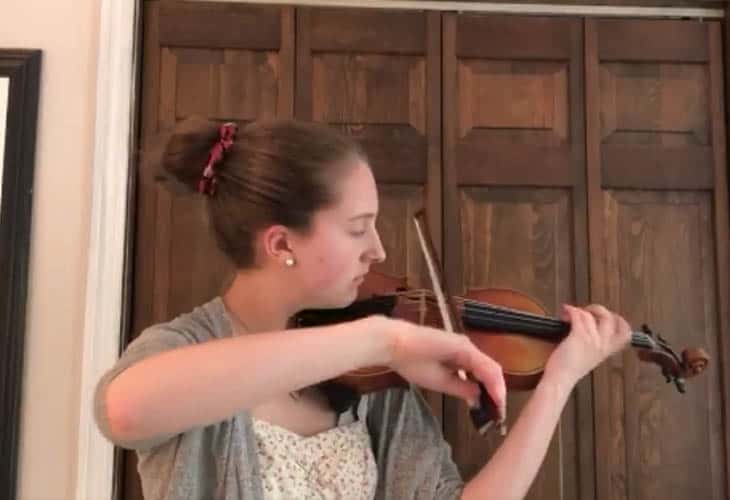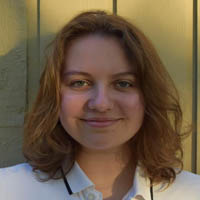
Nicole Dionne is a classically trained violinist, studying under Belinda Whitney. She is a current junior at Western Connecticut State University, pursuing her Bachelor’s Degree in Music Education. She has been playing violin for approximately thirteen years.
At WCSU, she plays in the orchestra, directed by Dr. Fernando Jimenez. She has also been in chamber strings, playing violin in mixed sections. She is currently the President of Strings Club, which is actively involved with ASTA (American Strings Teachers Association). When Nicole is not in school, she enjoys playing violin for community theaters, and has previously played in the Golden Years Theater Company’s Peter Pan as second violin, and Musicals at Richter’s Evita as first violin.
Previously, Nicole was in WCSU’s Symphonic Band under the direction of Dr. Matthew Doiron and WCSU’s Percussion Ensemble under the direction of Dr. Greg Haynes. In both ensembles, she played mixed percussion. Outside of violin and school, Nicole worked with the Time’s Fool Company in Hamlet as a foley artist. At Southbury Music Studio, Nicole’s goal is to encourage a positive relationship between learners and their instrument(s) and to provide artistic and technical guidance that further students’ interest and knowledge.
Ray
So Nicole, you have now been with the studio for how long?
Nicole
I think I started in April, so just a few months now.
Ray
And I’m kind of curious, how did you land there? Did you know the owners? How did that come about?
Nicole
So they needed a violin teacher on Saturday, and at that point I was looking for something of this nature, so I was all in basically.
Ray
Looking at your place as a performing musician, um, and so many instruments to choose from, what drew you to the violin?
Nicole
So it’s actually a really funny story. I wanted to start off with cello when I was in the 3rd grade, but I was a very, very short, small elementary school student, and I was like, you know what, this is just too big for me. And at that point, I knew of David Garrett. My grandma used to turn on like him playing from live on a disc, and it was like so cool to me. So it wasn’t like it was totally out of reach for violin, and my sister had just lost interest pretty much. She was like, oh, I’m not really gonna do this anymore. And then I was like, okay, well maybe I can jump on it. And that’s kind of where it started off.
Ray
So there was— was violin your first instrument then?
Nicole
Yes, violin was my first instrument.
Ray
I mean, after the cello, obviously.
Nicole
Yes.
Ray
Other than, uh, you know, playing violin, okay, we’re kind of talking about, you know, your own background, you know, how you, you know, got into all this. What do you do to relax? I mean, music is an outlet all by itself. But when it’s also part of your job, what else do you do?
Nicole
I like to illustrate. I like to sketch. In a lot of my free time, I like to write as well. I do like to compose, but that’s still in the field of music and that does help me relax. Um, but if we’re talking totally outside of music, yeah, I think sketching, illustrating, creating like stories, stuff like that. That sort of thing.
Ray
That is a very arts-heavy. I have a lot of respect for that.
Nicole
Thank you.
Ray
For, for those who decide to make the arts their vocation, I’m not sure those of us who have drifted into other areas, I will say, you know, my own is art adjacent. Yours is just so focused on that performance piece, on the, you know, playing. But then to also have other outlets, uh, in the, in the creative field. When you’re sketching, any favorite subjects to sketch?
Nicole
You know, I’m not that great at drawing animals. So usually it’s just like people, either are real or just like original ideas. Sort of thing, just kind of like that.
Ray
Not being a slouch, by the way. Animals aside, people are hard. Hands are hard. They look weird when you—
Nicole
Hands are difficult to draw.
Ray
Bringing us back to music, you’d mentioned your grandmother playing a particular disc for you that really, you know, really kind of spoke to you. Is there a genre that really inspires you or something you’re specifically drawn to?
Nicole
Yeah, classical. Definitely classical. a lot of periods of it too, whether that be like mostly romantic, but also just like in the brink of Mozart and then Beethoven kind of from that era.
Ray
I find it amazing that when we look at what happens to our brain when we listen to classical music,just what it develops in us, I guess the calm, the creativity that it inspires. Um, don’t get me wrong, um, I do love a good bass line when we go out dancing, but, you know, time alone and actually doingsomething creative, that’s— yeah, I appreciate what you’re— where you’re coming from. You— when you said your grandmother pulled out a disc, who was that?
Nicole
David Garrett. So he’s just like German violinist, and I don’t know too much about his personal life. I know he left his, um, I think parents to go perform. I’ve heard that they weren’t so supportive of his musical journey, and so he really wanted to do that, and so he went and he did it, and that was very, um, admirable.
Ray
Would you consider him to be your favorite artist, or is there someone else that might occupy that space for you?
Nicole
You know, for playing violin, honestly, yeah, he probably is like The one person who I would like gravitate towards listening to for violin.
Ray
Okay, but you were very specific, you know, violin. So that opens the field for others.
Nicole
Outside of, I think, violin and into the realm of like orchestral, I could think more easily orchestral. I like have been listening to Tchaikovsky since I was very young too. So he’s definitely been like, I feel the most emotions resonate from his music. And I find that I prefer to listen to him over pretty much any other composer. So.
Ray
Moving into the idea of being a musician and being a performer, um, I noticed in looking at your bio that you are a Foley artist. Now, a bunch of people that are watching this will have no idea what that means. Would you please round that out?
Nicole
Foley usually consists of creating sound effects that wouldn’t— aren’t normally in the track that you would hear or in the production that you would see necessarily, or even like edit into movie clips that you can choose to edit. It’s basically creating sound effects that could already be there, are not already there, and like so on.
Ray
Those are the things that maybe we don’t necessarily notice as we were watching a movie or some clip, but actually bring out more of the story And kind of help us track along with it.
Nicole
Yes, they can be like, um, created as part of an original idea. Like you can’t always organically get thunder sounds, so sometimes you have to create that on your own and use a thunder drum or some other instrument.
Ray
But that means I do have to ask, because once again, reading the bio, I saw foley artist and mixed percussion. Which came first for you?
Nicole
I was thinking about that, and Foley did come first. There was, uh, this project almost, I guess you could say, we had to do in middle school, and we were doing Foley arts and voiceovers of the Inside Out trailer.
Ray
Oh, fun.
Nicole
And I had the honor at the time, of course, of voicing Riley. I was very excited to do that. And we had to go through different ways to create sounds. There’s a scene with an alarm. There’s people typing or buttons being pressed. And we had to come up with original ideas to create those sounds.
Ray
So that might actually lead me right to my next question. Did I understand correctly that that was in middle school for you?
Nicole
Yes.
Ray
So did that sort of draw you into the theater, community theater part?
Nicole
Well, when it comes to theater, I did a summer program in elementary school because my mom works as an art teacher at Rotello Magnet School. And so I did some summer program stuff there, and they were involved with theater. So that was much earlier on, and it was just like small scenes from musicals and stuff like that.
Ray
It looks like You are involved in community theater now, is that correct?
Nicole
I’m on a small hiatus only because I just haven’t gotten involved with it so much as of late. But yes, before I did second violin for the Golden Years Theater Company’s Peter Pan, and that was done in Waterbury. And then I also did musicals at Richter’s, Evita, for first violin. And that was a very, very cool experience.
Ray
How do you find your experience in playing at community theater?
Nicole
It’s definitely more tight-knit. Everybody’s really close together, even physically. And so you’re dealing with a smaller group, so you know more faces, you know more names, you know more personalities and about them, you know, you learn their stories too. It’s definitely a better chance to be more like a community versus like, you know, If you’re working in a bigger orchestra, you might not know names or faces and stuff like that. You’re more focused on how you contribute to that group. Not to say that you wouldn’t in like a community theater per se, but—
Ray
No, but I would imagine too that the interactions between everyone in that size a group would be Much more reliant. I noticed that you are in the Strings Club at WCSU. Can you tell us a little bit about what that club does?
Nicole
Yes. So we recently did like a reading of music from Studio Ghibli productions. We get people together to read music, and we’re looking forward to doing some more stuff. We discussed Disney, I believe, for a group reading. We’ve done holiday music. And then there’s an event that we hold called Late Night with Strings, and it’s basically more general, a little less string-focused, about music knowledge and stuff like that, whether it be general knowledge or like kind of really close in if we want to make it difficult for people. And they— the people who attend those Late Nights with Strings can win prizes and stuff like that related to music. So like we gave away Uh, a metronome, I believe. And then we also have given away a karaoke machine and stuff like that.
Ray
Are you currently the president or a past president of that club?
Nicole
I would— I was president. Uh, right now I’m looking to be secretary. We move around a little bit.
Ray
Talking, uh, as an instructor now, it sounds like you have some family history in teaching, but you know, what inspired you to become an instructor?
Nicole
At first, I was kind of like lost on my path of what I really wanted to do. Um, I knew I loved being involved with music, but when people started asking me like, hey, what do you want to do for college? I originally was like, oh, maybe I’ll do like composition or something like that. And then I got opportunities in high school orchestra to lead a group to help students learn more about the instrument, to do like little private lessons here and there. And I had my first student in high school and I was able to learn what it was like to teach something and to see people improve and to see them get excited about things. And that was like a really, really good feeling, especially being able to like share that knowledge to answer questions that people had about learning music. And so I guess that pushed me into the direction of wanting to teach. And then a friend at the time had said to me, hey, why go to this school for composition when you can go to Western Connecticut State University for music teaching? And I was like, you know what?
Yeah. I like it. I like it a lot. And then I grew to love it even more when I got there and really started learning about even the difficult stuff that comes with it.
Ray
Do you find that younger musicians, um, how many of them do you think face performance anxiety? I mean, I can do it in my room, I can do it at home in the studio, but having more than 3 people in front of me, what, what’s your experience been like with that?
Nicole
It’s, I think it’s just a part of nature. You know, it’s not uncommon. And those students need to learn or need to know that they’re not alone. And I dealt, and I still do deal with some performance anxieties and being able to go out and face those challenges and get the opportunities to play in front of people is crucial to learning how to deal with it, or learning how to cope with it, I should say. Because if you don’t face it, it’s not gonna get better. It’s not always true that it’ll disappear completely, but I think, I think almost every student deals with that. And if they don’t, then they’re very fortunate. They are very fortunate cuz it’s, it’s a human feeling to be nervous.
Ray
True.
Nicole
And to go up and present something cuz you wanna do good. And you want to show people that you’ve been working so hard on this. And sometimes, like, all those eyes can be very overwhelming, whether or not they share music experience. It’s wanting to do the very best you can in the fear of maybe not or coming short. And people should also know that those people who are watching you want you to do good too.
Ray
One of the things I, uh, that really caught my eye as I was reading the prep materials for today was a quote, and I will give it back to you. Encourage a positive relationship between learners and their instruments. Help me understand that a little bit. I’ve never heard it phrased that way before. I never thought of, of that as a relationship. Tell me about that a little bit.
Nicole
Yes. So sometimes when things aren’t going so well, sometimes the blame doesn’t get put on ourselves and we’re never like, oh, why am I doing this? It’s like, why is this acting up like this? Like they take their instrument and they’re like, why are you making this sound? Why are you not sounding perfect? Like, I swear I’m doing the right thing. But being able to like tell somebody, hey, take a break, or accept that those things can happen. Like for violins or string instruments, sometimes you can get a whistle or a squeak in your string. And same with woodwinds, you can get a squeak or something won’t come out right. And being able to— tell somebody that that’s normal encourages that, like, relationship in the sense where they’re not like, oh, I’m not so annoyed. It is normal. I just need to get through it rather than be mad at it.
Ray
This might seem like an odd one, but in, in the age of AI, as we are all facing it, do you find that there are any technological challenges as you are looking to instruct and work with your students to better that relationship, to help them improve, to, you know, help them understand their musical journey. You know, what are the technological challenges that you see?
Nicole
With AI specifically?
Ray
Well, it could be AI or technology in general, but certainly AI.
Nicole
For AI, I think it definitely takes away from people’s creativity because they’re asking this device to do something for them that they can and they have the ability to organically produce themselves. I think that using AI for music takes away from the personality of the music because there can’t be personality within AI. AI’s personality is so technologically straightforward that it doesn’t— it can recognize feelings if you tell them. But it has no feelings as opposed to us as people. We experience so many feelings. And it’s like when you put those into music, when you put those feelings into music and you put it into your instrument, you put it into your voice, that resonates so much more than what any computer can write up.
Ray
I understand the, the ease of use. But there is no soul behind there. I think we connect emotionally with the story we hear or the story we read in the book, in the music, in the media. And I think while we’re doing that, we’re really looking for another person on the other side to connect with.
Nicole
Yes, that’s right.
Ray
Yeah. Thank you for that. Nicole, I have a last bonus question.
Nicole
Oh, sure.
Ray
What is your musical guilty pleasure?
Nicole
Okay, um, are we talking a genre, a habit?
Ray
You can answer it with any one of those you’d like.
Nicole
That’s a tough one. I’ve never thought of something like that before. Um, I think in the realm of music, I don’t know if this is so guilty as much as it is like, um, very nice. Um, I love a good vocal harmony, like especially if you’re singing in a group with your friends and it just is like the perfect resonance and everything, and you’re just sitting there looking at them like, wow, that was really, really good. So that, I guess—
Ray
Uh, this has been such a pleasure. Is there anything that you would like to say to either invite or speak to those students of the violin who have not yet met you or perhaps gone to the Southbury Music Studio yet?
Nicole
Yes. Violin is for everyone. Music is for everyone, and it can be A very, very fun experience.
Ray
Nicole, thank you. It has been a real pleasure sitting down to talk with you today, and thank you for making the time.
Nicole
Yes, of course. Thank you so much for having me.